

Ball Bearings for Industrial & OEM Applications
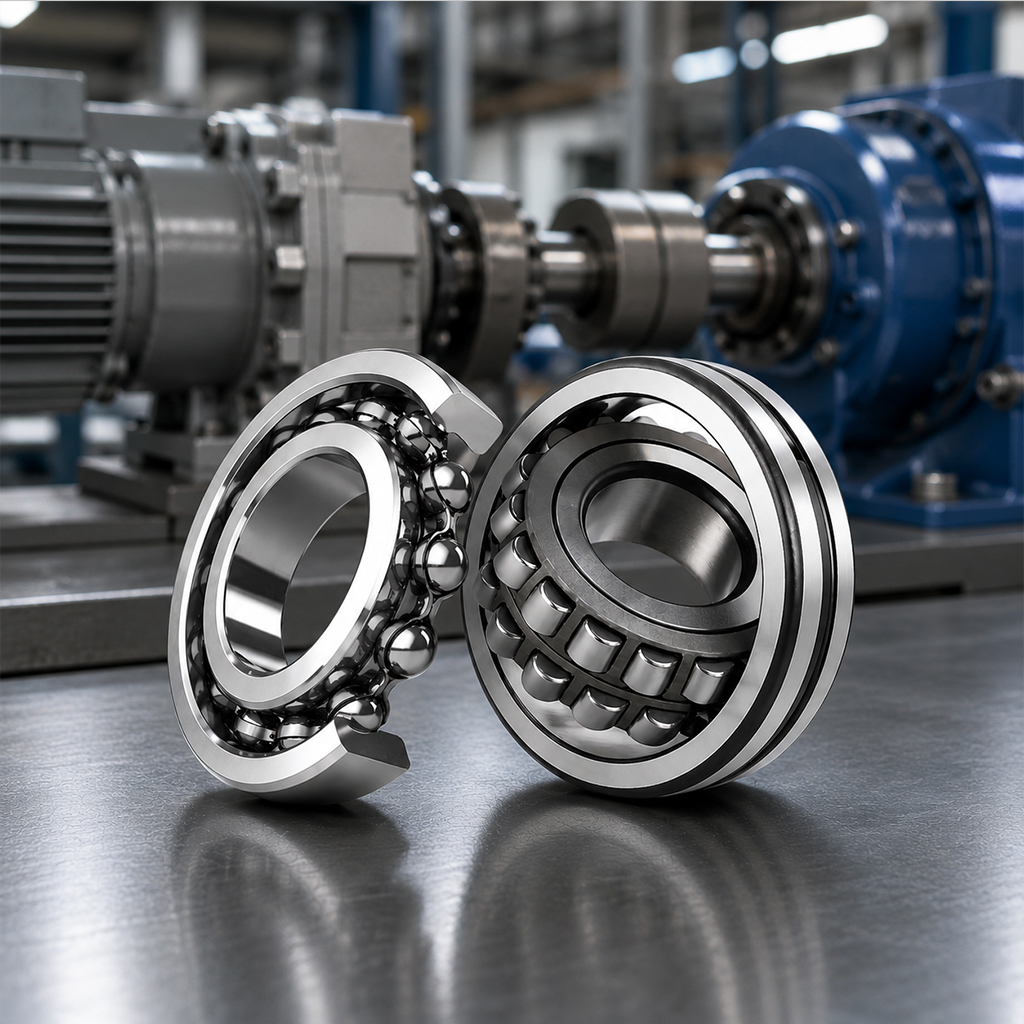
Durability
Robustness of industrial bearings allows them to withstand high-speed operations and severe environments.
Load Handling
Able to handle radial, axial, or a combination of both types of loads.
Reduced Friction
Designed to reduce rotational friction, aiding the smooth operation of industrial equipment.
Bearing Interchange & Cross-Reference
Find NPBS® bearing equivalents for commonly used international bearing brands and part numbers.


Ball Bearing Product Range
Explore NPBS® ball bearing families by internal design, load capability, speed requirements, installation space, and application conditions.
Deep Groove Ball Bearings →
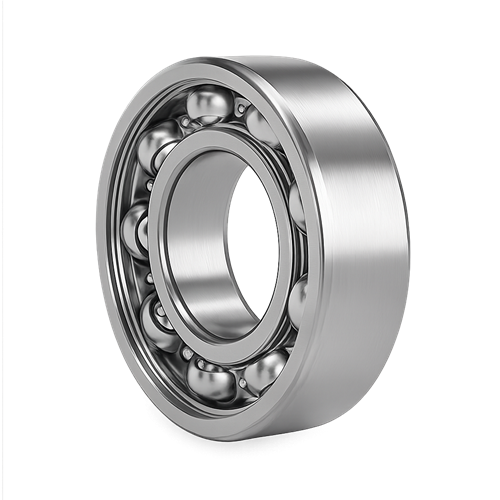
Versatile, low-friction bearings designed for high-speed operation and radial loads with moderate axial load capability. Widely used in electric motors, pumps, gearboxes, appliances, conveyors, and general industrial machinery.
Angular Contact Ball Bearings
Precision bearings with contact angles designed to support combined radial and axial loads. Suitable for high-speed spindles, pumps, gearboxes, machine tools, robotics, and precision equipment.
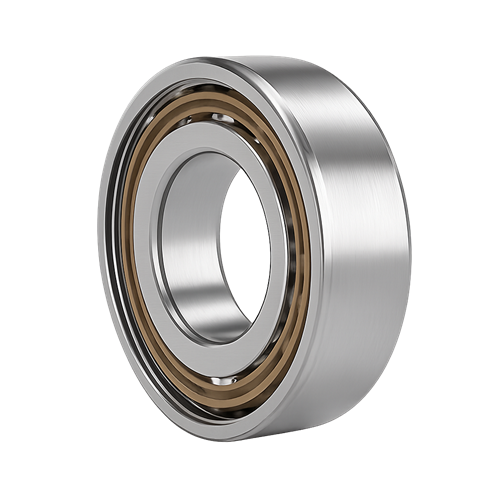
Self-Aligning Ball Bearings
Double-row ball bearings with a spherical outer raceway that accommodate shaft misalignment and mounting deflection while maintaining smooth, low-friction rotation.

Miniature Ball Bearings →
Compact precision bearings engineered for small shafts, high rotational speeds, low torque, and limited installation space in instruments, RC models, robotics, medical devices, and compact motors.
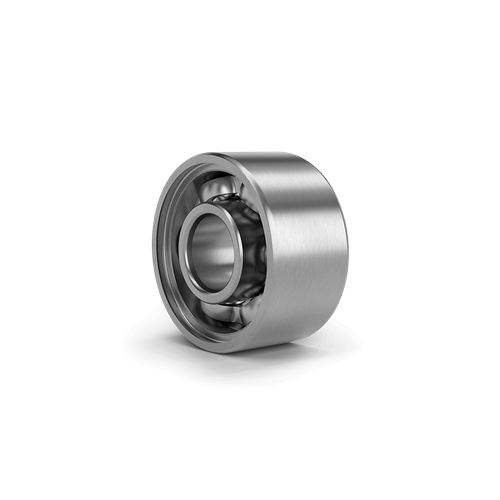
Four Point Contact Ball Bearings
Single-row angular contact designs engineered to support axial loads in both directions while carrying moderate radial loads, offering compact solutions where installation space is limited.
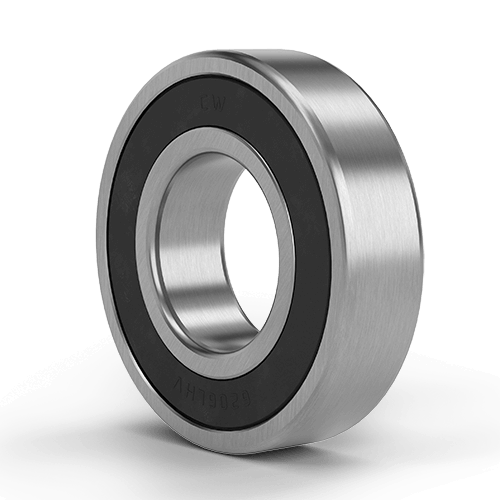
Featured Bearings

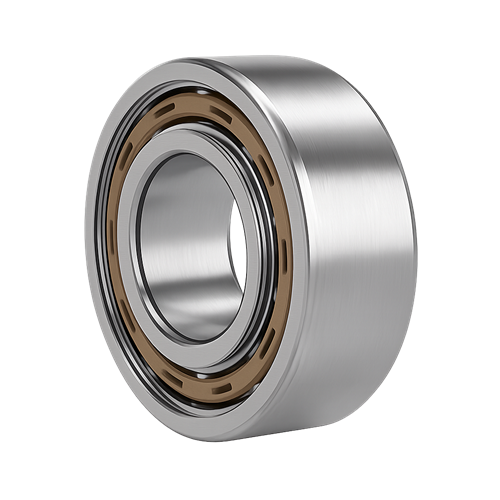
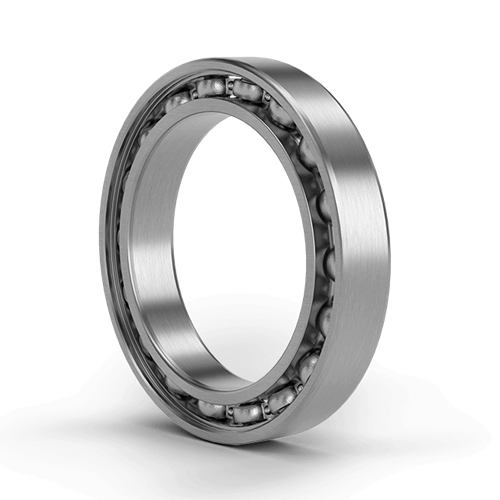
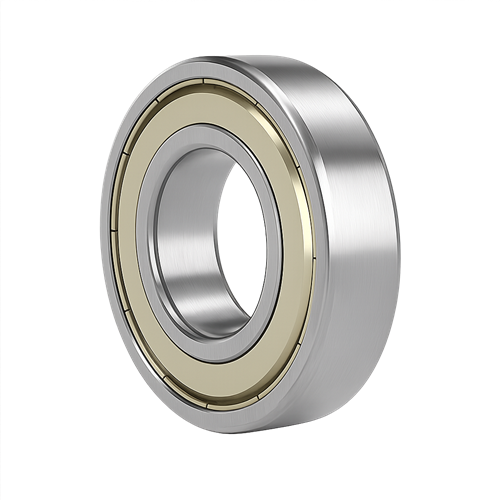

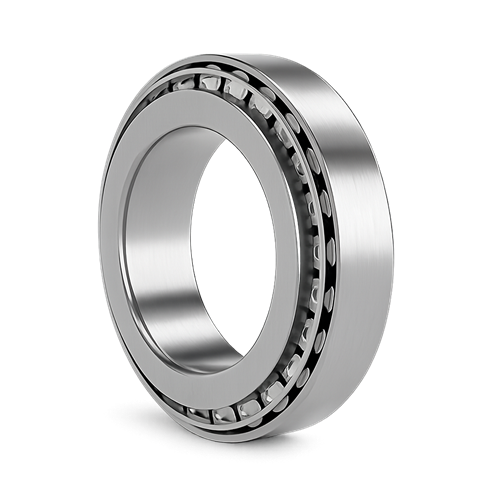


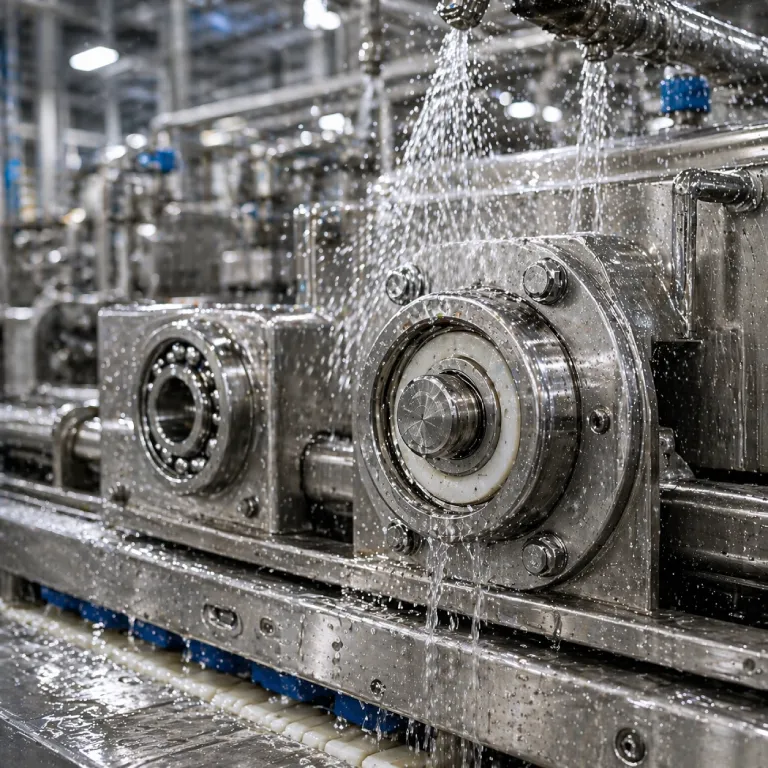


Ball Bearing Applications
From industrial machinery to compact precision equipment, ball bearings support reliable motion across a wide range of operating environments.
Ball Bearing Selection Guide
Selecting the correct ball bearing starts with the operating conditions rather than the bearing number alone. Evaluate the following parameters before confirming a bearing design.
Select the bearing type and internal design best suited to the load direction, speed, stiffness, alignment, and application requirements.
Confirm bore, outside diameter, width, fits, tolerances, and the available shaft and housing installation space.
Determine radial, axial, combined, static, dynamic, and shock loads.
Evaluate operating and maximum rotational speed together with lubrication and sealing requirements.
Define runout, vibration, noise, torque, and positioning requirements.
Consider temperature, dust, moisture, chemicals, vibration, and contamination.
Select grease or oil type, viscosity, fill quantity, relubrication interval, and lubrication method for the operating conditions.
Evaluate duty cycle, reliability targets, maintenance intervals, and expected bearing life.

Ball Bearing Design & Engineering
Bearing performance depends on more than bore size and outside diameter. Internal geometry, clearance, cage design, precision, sealing, lubrication, material, and operating conditions all influence speed capability, noise, temperature, service life, and reliability.
Load & Contact Geometry
Bearing geometry and contact conditions are evaluated to support radial, axial, combined, and application-specific load requirements.
Internal Clearance
Internal clearance can be selected or controlled to suit operating temperature, fit, speed, and application requirements.
Precision Classes
Precision class selection supports required tolerances, running accuracy, speed capability, and positioning performance.
Seals & Shields
Seal and shield configurations help balance contamination protection, friction, speed, and lubricant retention.
Lubrication
Grease, oil, fill quantity, and lubrication strategy can be matched to speed, temperature, load, and service conditions.
Materials & Heat Treatment
Bearing steels, stainless materials, ceramics, and heat-treatment options can be matched to performance and environmental demands.
OEM & Custom Ball Bearing Solutions
NPBS® supports OEM and application-specific ball bearing requirements with configurable materials, internal clearances, precision classes, seals and shields, lubrication, dimensions, and private-label packaging. From specification review and sample validation to production, our engineering team helps match bearing design to your operating requirements.
Custom Bearing Design
Custom dimensions, geometry, and application-specific configurations.
Materials & Special Treatments
Alternative bearing steels, stainless steel, ceramics, coatings, and heat-treatment options.
Sealing & Lubrication Options
Application-specific seals, shields, grease, oil, and lubricant fill options.
Prototype & Sample Development
Engineering review, prototype development, samples, and pre-production validation.
Private Label & Packaging
Customer branding, labeling, packaging, barcodes, and identification requirements.
OEM Production & Supply
Volume production, quality control, traceability, and scheduled supply programs.
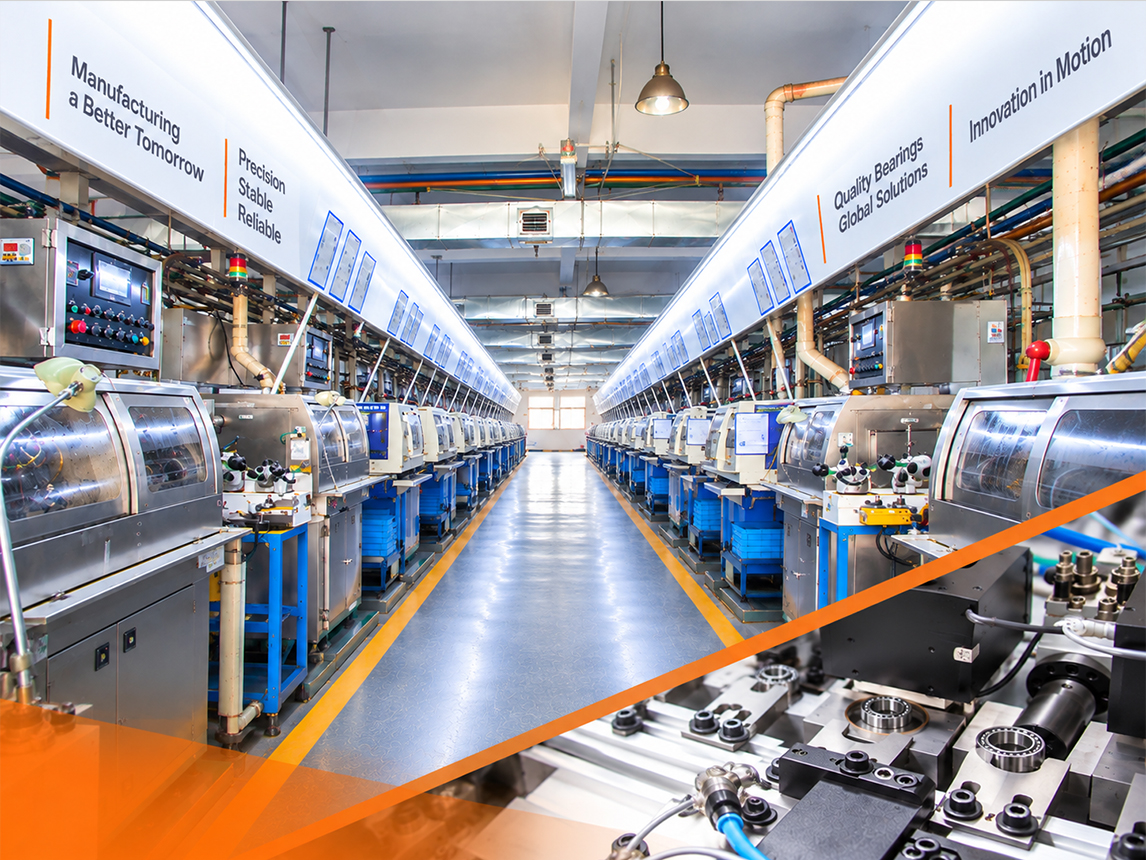
How Are Bearings Made?
From forming and heat treatment through precision finishing, assembly, and final inspection, each stage is controlled to support consistent bearing geometry, surface quality, and running performance.
Forming
Rings and rolling elements are formed or machined to establish the basic bearing geometry.
Heat Treatment
Controlled heat treatment develops the hardness, wear resistance, and dimensional stability required for service.
Precision Grinding
Raceways, bores, outside diameters, and critical surfaces are precision ground to controlled geometry and tolerances.
Superfinishing
Critical contact surfaces are finished to reduce roughness, friction, vibration, and running noise.
Assembly & Lubrication
Components are cleaned, matched, assembled, lubricated, and fitted with cages, seals, or shields as required.
Final Inspection
Dimensional, rotational, noise, vibration, and visual checks verify the finished bearing before packaging.
Quality Inspection & Testing
Finished bearings are checked through dimensional inspection, running-performance verification, vibration and noise testing, visual inspection, and traceability controls before final release.
Dimensional Inspection
Bore, outside diameter, width, runout, and other critical dimensions are verified against specified tolerances.
Vibration & Noise Testing
Vibration and acoustic checks help identify abnormal running conditions and verify smooth, low-noise performance.
Rotational Performance
Rotational torque, smoothness, speed behavior, and running characteristics are checked where required.
Visual & Assembly Inspection
Assembly condition, seals, shields, lubrication, markings, and appearance are inspected before release.
Material & Hardness Verification
Material specifications, hardness, and heat-treatment results can be verified according to product and customer requirements.
Traceability & Final Release
Inspection records, batch identification, and final verification support traceability before packaging and shipment.
Need Ball Bearings for Your Application?
Send us your bearing number, dimensions, drawings, operating conditions, and estimated quantity. Our engineering team will help evaluate the suitable ball bearings design for your application.
What to Include in Your RFQ
Drawings, samples, cross references, and target specifications are welcome.
Ball Bearing FAQs
NPBS® supplies a broad range of industrial bearings, including ball bearings, roller bearings, angular contact bearings, thrust bearings, miniature bearings, linear bearings, and other application-specific bearing solutions. Our products support electric motors, robotics, automation, medical equipment, food processing, power transmission, e-mobility, and other industrial applications.
Bearing selection depends on operating load, speed, shaft and housing dimensions, accuracy, temperature, environment, lubrication, and expected service life. NPBS® can evaluate your application requirements and recommend suitable bearing types, materials, internal clearances, precision grades, sealing arrangements, and lubrication options.
Yes. NPBS® supports OEM and application-specific bearing requirements, including custom dimensions, materials, heat treatment, internal clearance, precision grades, seals, lubrication, and packaging. Our engineering and manufacturing teams can support projects from specification evaluation and sample development through production and quality verification.
Depending on the bearing type and application, NPBS® can provide bearings manufactured from chrome steel, stainless steel, and other application-specific materials. Material selection can be evaluated according to load, speed, corrosion resistance, temperature, operating environment, and required bearing performance.
Yes. Internal clearance and precision grades can be specified according to application requirements. Factors such as operating speed, shaft and housing fits, temperature, load, rotational accuracy, vibration, and noise should be considered when determining the appropriate clearance and precision level.
NPBS® offers different sealing, shielding, grease, and lubrication configurations depending on bearing type and operating conditions. Options can be selected according to speed, temperature, contamination exposure, friction requirements, service life, noise, and maintenance conditions.
Yes. NPBS® supports OEM and private-label packaging for distributors, bearing brands, and industrial customers. Depending on project requirements, packaging can include customer branding, labels, barcodes, part numbers, individual boxes, bulk packaging, and other customized identification and packaging specifications.
Send NPBS® your bearing part numbers, dimensions or drawings, required quantities, application information, and any specific requirements for materials, clearance, precision, seals, lubrication, or packaging. Our team can review the specifications and provide a quotation based on your purchasing and technical requirements.